
ANA MARIA SILVA CAMPO
historian and author | Making sense of latin america's past
The Book
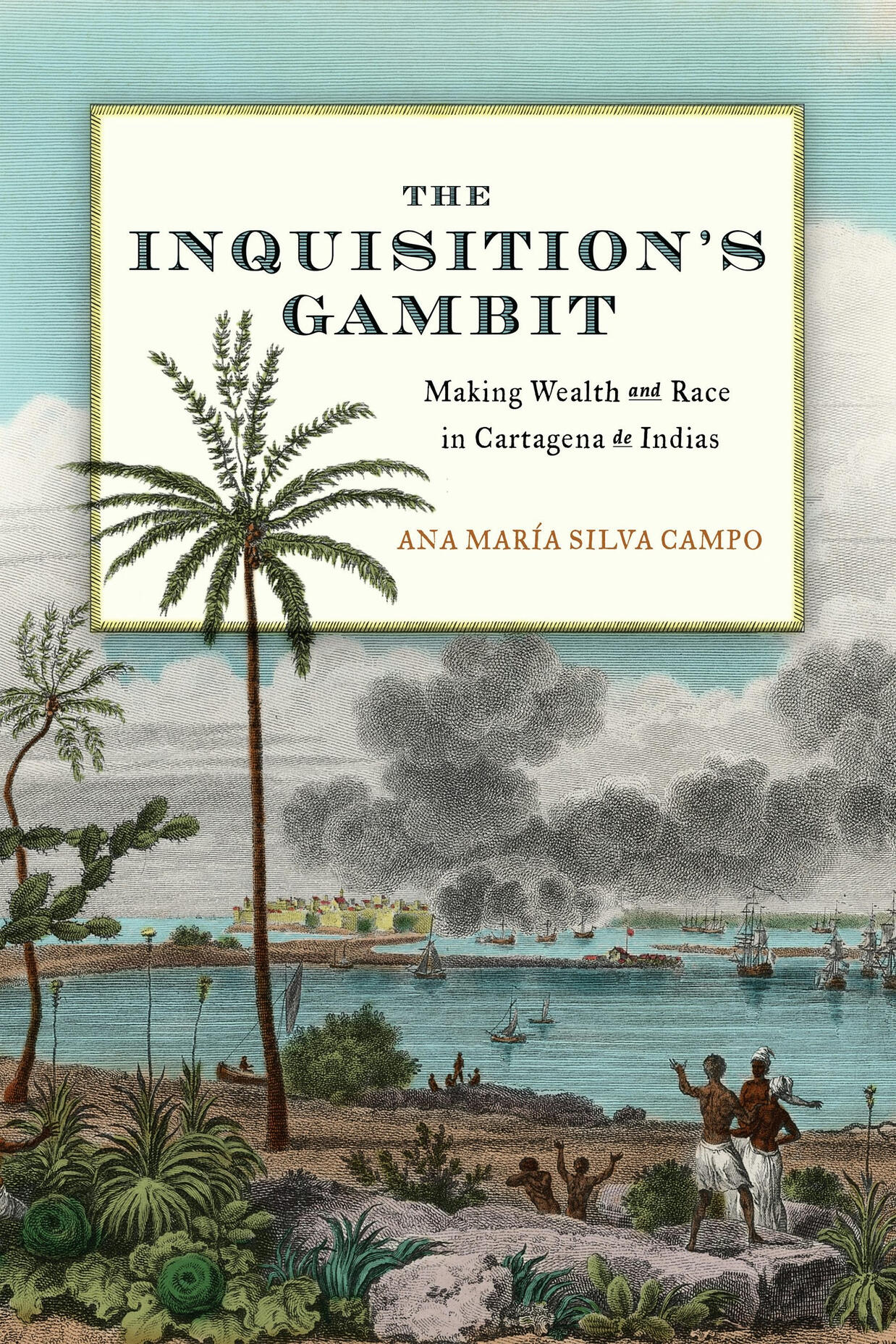
In colonial Cartagena de Indias, slavery and the trade in enslaved Africans shaped the city’s wealth, its neighborhoods, and its social hierarchy. It also shaped the world the Spanish Inquisition entered when it arrived there in the seventeenth century.The tribunal worked through accusation and punishment. It charged people with witchcraft, heresy, or moral deviance, declared them guilty, and confiscated their property. In 1632, officials arrested Teodora de Salcedo and fifteen other women of African descent who had once been enslaved. The Inquisition took their homes and auctioned them off to men of Catholic ancestry. At the same time, some of the city’s most powerful traders in enslaved people remained untouched, at least for a while, even though many were suspected of secretly practicing Judaism. The Inquisition helped determine who lost wealth and who rose within Cartagena’s elite.Drawing on rarely studied financial records, The Inquisition’s Gambit follows the people caught up in this system as well as the houses, clothes, furniture, jewelry, and other belongings that changed hands. It shows how the tribunal’s prosecutions helped build Cartagena’s social and economic order through selective punishment, confiscation, and redistribution.
available wherever books are sold
30 % off with code PENN-ACAMPO30
ABOUT THE AUTHOR
Ana María Silva Campo grew up in Colombia and trained as a historian at the Universidad de los Andes, where she learned paleography, the skill of reading centuries-old manuscripts whose handwriting, spelling, and abbreviations bear little resemblance to modern written language.She has always been drawn to the physical world of the past, to cities where centuries of habitation have left traces in streets and buildings, and to objects that outlast the people who owned them. Cartagena de Indias had fascinated her long before it became the subject of her research: one of the most beautiful colonial cities in the Americas, a UNESCO World Heritage site with massive stone walls, churches, and the former palace of the Spanish Inquisition, all set against a Caribbean bay and wrapped in stories of pirate attacks. But Cartagena was also the main legal port of entry for enslaved Africans into Spanish South America for much of the colonial period, a history that did not fully come into focus for her until she left Colombia for graduate school.During a research stay in Spain as part of her doctoral work, she found something she hadn’t expected: the Inquisition’s financial records. Historians of the Inquisition typically work with judicial documents, faith trials, records of prosecution for heresy or moral deviance, sources dense with testimony and human drama. The financial records are drier by comparison, but they are full of things: houses, clothes, bedsheets, furniture, jewelry. They record the contents of houses the Inquisition seized from people accused of straying from Catholic doctrine and morality. Among them were women who had bought their own freedom from slavery. Their possessions were then catalogued by an institution at the center of one of the most important ports for the trade in enslaved people to the Americas. How had the Inquisition’s story and the story of slavery in Cartagena become so entangled?That question became the starting point for The Inquisition’s Gambit, the result of more than a decade of research.Silva Campo teaches history at the University of North Carolina at Chapel Hill.
Contact
For speaking invitations, interviews, and other professional inquiries, please email: silvacampo.research[at]gmail.com.